Protect our Water
Southold depends on one shared freshwater source: the Upper Glacial Aquifer beneath our feet.
Whether your home uses public water or a private well, we all rely on the same underground supply — and the choices we make at home affect its future.
This page brings together practical information about where our water comes from, why it is under strain, and what residents can do to help protect it.
3 things to know
One shared source
Southold’s freshwater comes from the Upper Glacial Aquifer. Public and private wells both draw from this same underground source.
Summer puts the system under stress
Water demand rises sharply in summer, especially when irrigation systems run in the early morning hours.
Everyday choices matter
How we water, what we put on our lawns, and what goes down our drains all affect the aquifer and nearby waterways.
Where our Water Comes From
All of Southold’s freshwater comes from the aquifer below us.
Rain and snow recharge that underground water supply, and from there the water is drawn either by Suffolk County Water Authority wells or by private wells on individual properties. The aquifer is easiest to picture as a natural underground reservoir made up of sand, gravel, and other deposits that hold freshwater.
Because Southold is narrow and surrounded by salt water, this freshwater supply is more limited and more vulnerable than many people realize.
To picture the aquifer, it helps to think of freshwater stored underground above surrounding salt water.
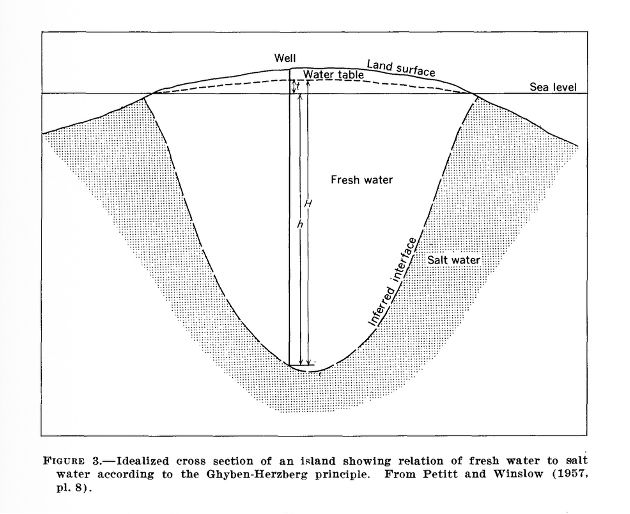
How Southold’s freshwater sits underground
This simplified cross-section shows freshwater resting above surrounding salt water. That is one reason Southold’s water supply is limited and why overuse can create risks over time.
Why it Matters
Our water supply is shared, vulnerable to contamination, and limited in some parts of town. Summer demand, especially from irrigation, places the greatest strain on the system.
When demand rises too quickly, it can reduce capacity and increase the risk of saltwater intrusion, which can permanently damage public supply wells and the aquifer. Careful water use, smart watering, and following local rules all help protect this shared resource for our community and for future generations.
Summer demand is not steady throughout the day. It spikes sharply in the early morning hours when many irrigation systems are running at the same time, putting the greatest strain on the water system.
SCWA estimates that more than 70% of warm-weather water use is for residential irrigation.
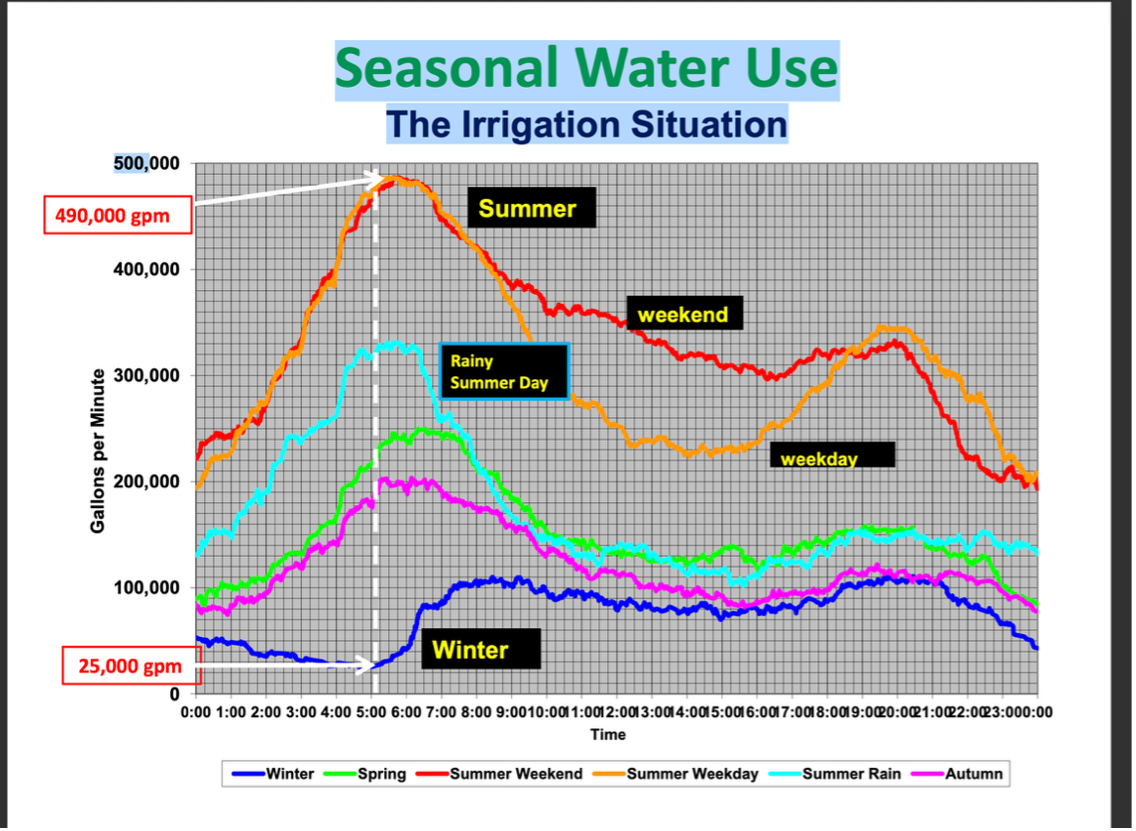
Summer irrigation sharply increases water demand
This graph shows how water use rises dramatically in summer, especially in the early morning hours when many irrigation systems are running. That surge places the greatest strain on the system.
These patterns affect more than convenience. They can strain the water system, reduce reliability, and increase long-term risk to the aquifer.
The good news is that many of the most helpful solutions begin at home.
What You Can Do
Small household choices can make a real difference, especially during the summer months.
The most helpful actions reduce demand, limit waste, and keep harmful chemicals out of the groundwater system. Even small changes add up across the community.
Outdoor Water Use
Follow the irrigation rules, water only when necessary, and consider reducing high-maintenance lawn areas. Native plantings, rain barrels, bioswales, and low-water landscaping can all help reduce demand.
Indoor Water Use
Fix leaks promptly, turn off the tap when not in use, and run dishwashers and washing machines only when full. When replacing fixtures or appliances, look for WaterSense-labeled products.
Household Chemicals & Yard Care
Use biodegradable cleaning products when possible, avoid flushing pharmaceuticals, and bring hazardous products and paints to approved collection programs. Use fertilizer sparingly and at the right time.
Irrigation Law Basics
If you water your property, it is worth reviewing the rules carefully.
In some cases, the law applies not only to automatic irrigation systems but also to hose-and-timer setups.
New or expanded irrigation systems installed after July 23, 2025 must include a smart controller and at least one rain sensor.
Existing automatic irrigation systems must be upgraded by July 2028.
Watering must follow an odd/even schedule based on house number, and daily watering is prohibited.
Smart controllers must stop watering after one-half inch of rainfall and remain off for two days afterward.
Suffolk County conservation rules also apply, including the odd/even schedule and the no-watering period from 10 a.m. to 4 p.m.